Leading optical metrology innovator Zygo Corporation has developed an array of anti-vibration solutions over the years, the most recent of which is the FT-QPSI which offers a measurement mode with vibration robust performance that can be used on the Zygo Verifire MST anywhere FT-PSI can be used.
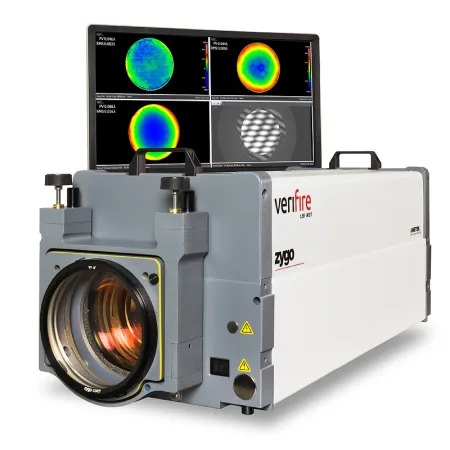
Environment is a very important factor in metrology. When measuring in the order of nanometers, even seemingly small amounts of motion in the measurement path can be significant. Data acquisition takes place over time, so any environmental change during the measurement shows up in the data. The presence of vibration during a laser interferometer measurement can cause fringe print through, drop out, and in some cases, the inability to collect data at all.
Erin McDonnell, Associate Product Manager (Optical Test), at ZYGO explains,
“FT-QPSI builds upon the QPSI anti-vibration solution that ZYGO introduced in 2014. Both solutions are a nod towards the fact that laser interferometry is transitioning away from carefully controlled lab environments as a growing number of applications demand easy, reliable solutions in environments where it was previously impossible to achieve quality metrology.”
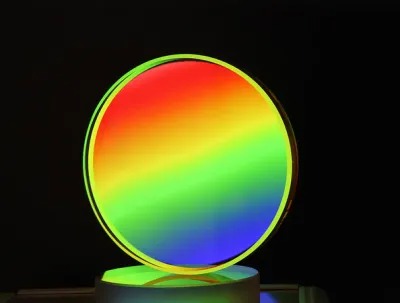
QPSI acquisition is a model-based approach that addresses rigid body vibrations, and increases vibration tolerance without sacrificing lateral resolution. QPSI was a breakthrough in precision optical testing, eliminating noise and ripple print-through in phase data due to small vibrations, and providing reliable data that would otherwise be ‘noisy’ with traditional PSI acquisition.
QPSI measurements require no special setup or calibration, and cycle times are typically equivalent to standard PSI measurements. QPSI is today included as standard on ZYGO’s range of interferometers, enabling reliable high-precision measurements in the presence of vibration from manufacturing equipment.
McDonnell continues,
“QPSI acquisition only supports two surface cavities, meaning a single interference pattern. To address this, ZYGO developed FT-QPSI acquisition, a measurement mode with vibration robust performance which includes simultaneous front and back surface measurements, optical thickness variation measurements, and homogeneity measurements. FT-QPSI uses the same model-based technique as QPSI with an expanded physical model to account for the additional surfaces and works with the company’s Multi-Surface Test (MST) interferometers.”
Multi-Surface Test (MST) applications are particularly susceptible to vibration, so FT-QPSI measurement mode is an important development. Thin glass parts (< 1mm thick) are an increasingly in demand application for MST interferometers making FT-QPSI measurement mode invaluable as these samples deform more easily than thicker samples, so the data is more likely to be affected by vibration. Homogeneity measurements are also a core capability for MST interferometers, but homogeneity data tends to have a low PV (peak-valley) so even small amounts of print-through from vibration are visible in the data and greatly effects the measurement quality. Again, the need for FT-QPSI measurement capabilities in such scenarios is obvious.
FT-QPSI acquisition ships standard with all of ZYGO’s new Verifire MST models. It is also available with an upgrade to the latest version of software on all Verifire MST instruments running Mx software
For more information:
www.zygo.com

 Tiếng Việt
 Tiếng Anh
 Tiếng Hàn
 Tiếng Trung