Cameras have been deployed in factories for over a decade — so why, Franz Tschimben wondered, hasn’t automated visual inspection yet become the worldwide standard? This question motivated Tschimben and his colleagues to found
Covision Quality, an AI-based visual-inspection software startup that uses NVIDIA technology to transform end-of-line defect detection for the manufacturing industry.
“The simple answer is that these systems are hard to scale,” said Tschimben, the northern Italy-based company’s CEO. “
Material defects, like burrs, holes or scratches, have varying geometric shapes and colors that make identifying them cumbersome. That meant quality-control specialists had to program inspection systems by hand to fine-tune their defect parameters.”
Covision’s software allows users to train AI models for visual inspection without needing to code. It quadruples accuracy for defect detection and reduces false-negative rates by up to 90% compared with traditional rule-based methods, according to Tschimben.
The software relies on
unsupervised machine learning that’s trained on NVIDIA RTX A5000 GPUs. This technique allows the AI in just one hour to teach itself, based on hundreds of example images, what qualifies as a defect for a specific customer. It removes the extensive labeling of thousands of images that’s typically required for a supervised learning pipeline.
The startup is a member of
NVIDIA Metropolis — a partner ecosystem centered on vision AI that includes a suite of GPU-accelerated software development kits, pretrained models and the TAO toolkit to supercharge a range of automation applications. Covision is also part of NVIDIA Inception, a free, global program that nurtures cutting-edge startups.
Reducing Pseudo-Scrap Rates
In manufacturing, the pseudo-scrap rate — or the frequency at which products are falsely identified as defective — is a key indicator of a visual-inspection system’s efficiency. Covision’s software, which is hardware agnostic, reduces pseudo-scrap rates by up to 90%, according to Tschimben.
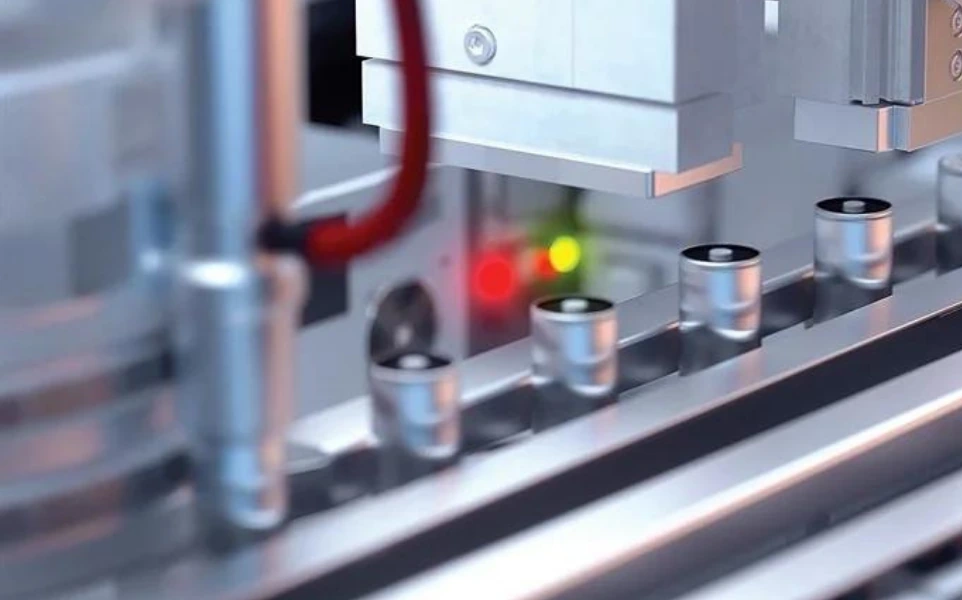
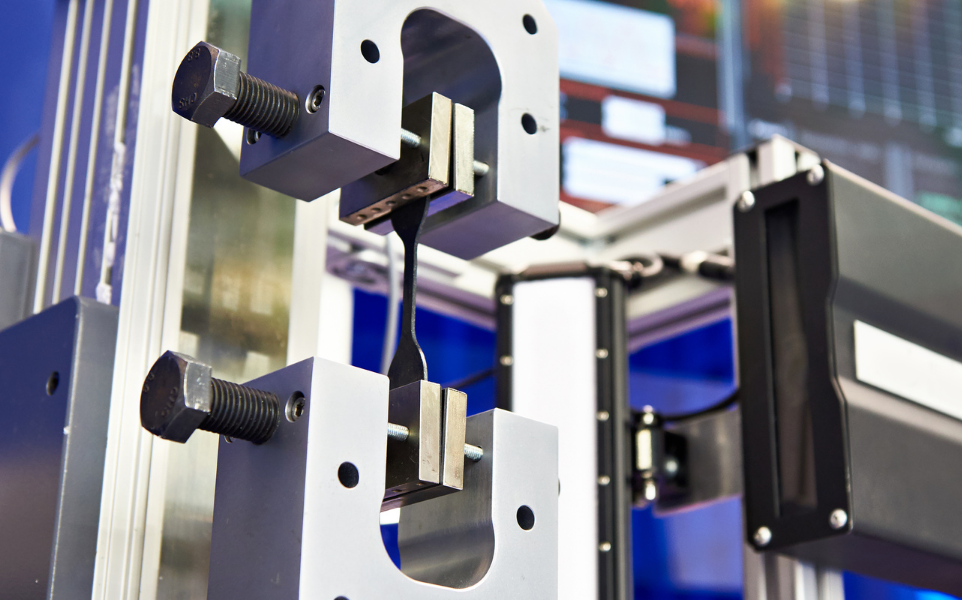
As an item passes through a production line, a camera captures an image of it. Then, Covision’s real-time AI model analyzes it. Finally, it sends the information to a simple user interface that displays image frames: green for good pieces and red for defective ones.
For GKN Powder Metallurgy, a global producer of 13 million metal parts each day, the above steps can occur in as quick as 200 milliseconds per piece — enabled by Covision software and NVIDIA GPUs deployed at the production line.
Two to six cameras usually inspect one production line at a factory, Tschimben said. And one NVIDIA A5000 GPU on premises can process the images from four production lines in real time. “NVIDIA GPUs are robust and reliable,” he added. “The TensorRT SDK and CUDA toolkit enable our developers to use the latest resources to build our platform, and the Metropolis program helps us with go-to-market strategy — NVIDIA is a one-stop solution for us.”
Increasing Efficiency, Sustainability in Industrial Production
In addition to identifying defective pieces at production lines, Covision software offers a management panel that displays AI-based data analyses of improvements in a production site’s quality of outputs over time — and more.
“It can show, for example, which site out of a company’s many across the world is producing the best metal pieces with the highest production-line uptime, or which production line within a factory needs attention at a given moment,” Tschimben said.
This feature can help managers make high-level decisions to optimize factory efficiency, globally.
“There’s also a sustainability factor,” Tschimben said. “
Companies want to reduce waste. Our software reduces production inefficiencies, increasing sustainability and making the work more streamlined.”
For more information:
www.covisionquality.com
 Tiếng Việt
 Tiếng Anh
 Tiếng Hàn
 Tiếng Trung