 Tiếng Việt
 Tiếng Anh
 Tiếng Hàn
 Tiếng Trung
Deep learning technology is revolutionizing the world. Businesses of all sizes are starting to realize the potential that this technology has to offer. One sector, in particular, that is seeing great benefits from deep learning is the industrial sector.
In particular, deep learning is being used for defect detection applications in quality control. Quality control is essential for any manufacturer who wants to produce high-quality products. The quality of a product, and thus its price, can be directly affected by the number and severity of defects present in it. This article discusses why training data is so crucial for deep learning and how AI can improve defect detection.
What is Deep Learning?
Deep learning is a type of machine learning that allows computers to learn from data in a way that resembles the way humans learn. Deep learning networks are composed of many layers, each of which performs a different task. The training process involves adjusting the weights of the connections between these layers so that the network can correctly identify patterns in the training data.
In layman’s terms, deep learning is a method of teaching computers how to learn from data. This process can be used for tasks such as image recognition, object detection, and natural language processing. For the industrial sector, automatic optical inspection (AOI) can be powered by deep learning.
Why is Training Data so Important for Deep Learning?
Training data is essential for deep learning technology. The training process cannot be completed without data. This is because the network needs to be trained on a dataset of images that contain relevant patterns to identify defects in images. Without training data, the network will not know what to look for and will not be able to identify defects.
In the context of quality control, training data is used to teach deep learning networks how to identify defects in images. The more available training data, the better the network will be at identifying defects. This is because the training process will allow the network to learn from a wider variety of images. As a result, the network will be better equipped to identify defects in new and different images.
How can Deep Learning be Used for Defect Detection?
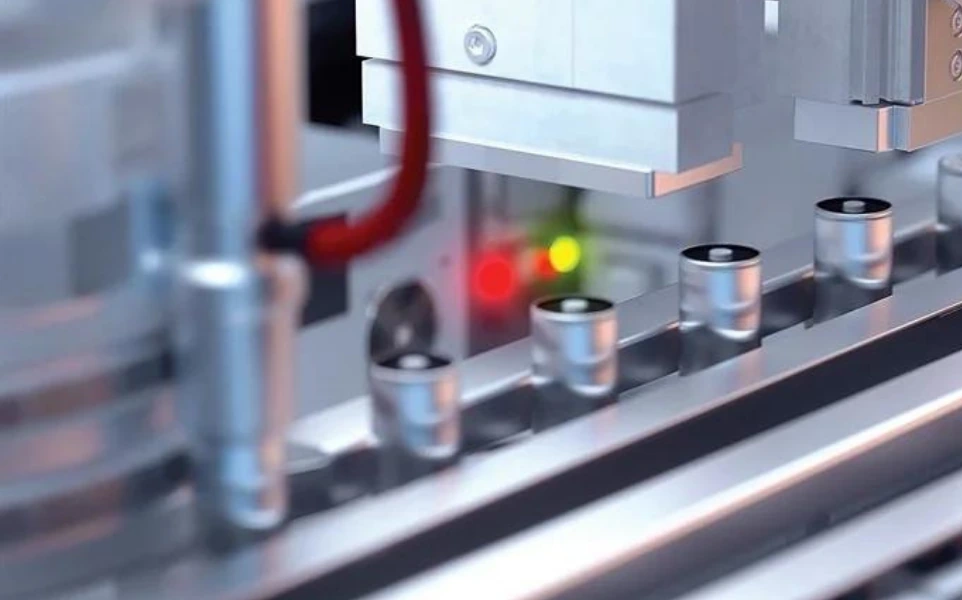
Deep learning is a new technology that can be used for defect detection applications in quality control. In particular, deep learning networks can recognize defects in images from machine vision systems. The most common application of this technology is in the field of Automated Optical Inspection (AOI).
AOI is a process that uses cameras to inspect products for defects. The images captured by these cameras are then analyzed by a computer in order to identify any defects present in the product. In the past, AOI has been performed using traditional image processing techniques. However, deep learning has begun to replace these techniques in recent years.
There are several reasons why deep learning is a better option for defect detection than traditional image processing techniques.
First, deep learning networks are able to learn from data in a way that is similar to the way humans learn. These networks look at thousands of images and extract the subtle ‘features’ of an image. This makes these networks better at identifying defects in images than classical image processing. In contrast, classical image processing uses stringent rules to decide whether a defect is present, an approach that is not robust for varied situations.
Second, deep learning networks are able to identify defects that are not detectable by traditional image processing techniques. For example, changes in ambient lighting can affect traditional image processing techniques, but deep learning is more resistant to these changes.
Finally, deep learning can be faster to deploy than traditional image processing. With pre-trained models or synthetic training data users can rapidly experiment with and deploy deep learning to their facility.
How to Collect Training Data for Deep Learning?
The best way to collect training data for deep learning is by using a dataset containing images of products that have been inspected for defects. This dataset can be used to train the deep learning network on how to identify defects in images.
In some cases, you will need to collect sample imagery of defective products. However, since defects are rare, this can be challenging. This is where a company such as Simerse comes in. If you are looking to collect training data for deep learning, Simerse offers a wide range of training data for deep learning, including datasets containing images of products that have been inspected for defects. Datasets are customizable, so users can choose the specific type of training data that you need.
What is the Return on Investment from Deep Learning?
The return on investment from deep learning can be significant. In particular, deep learning can help improve product quality and reduce the number of defects that occur in production.
In addition, deep learning can also help you save money by speeding up the defect detection process. With deep learning, users can quickly identify and fix defects in products saving both time and money.
Conclusion – Deep Learning is a Powerful Tool for Defect Detection
Deep learning is a powerful tool for defect detection. It has been shown to be more effective than traditional image processing techniques in detecting defects in imagery. In addition, deep learning can be faster to deploy and offers a better return on investment than traditional image processing.
For for information: www.simerse.com