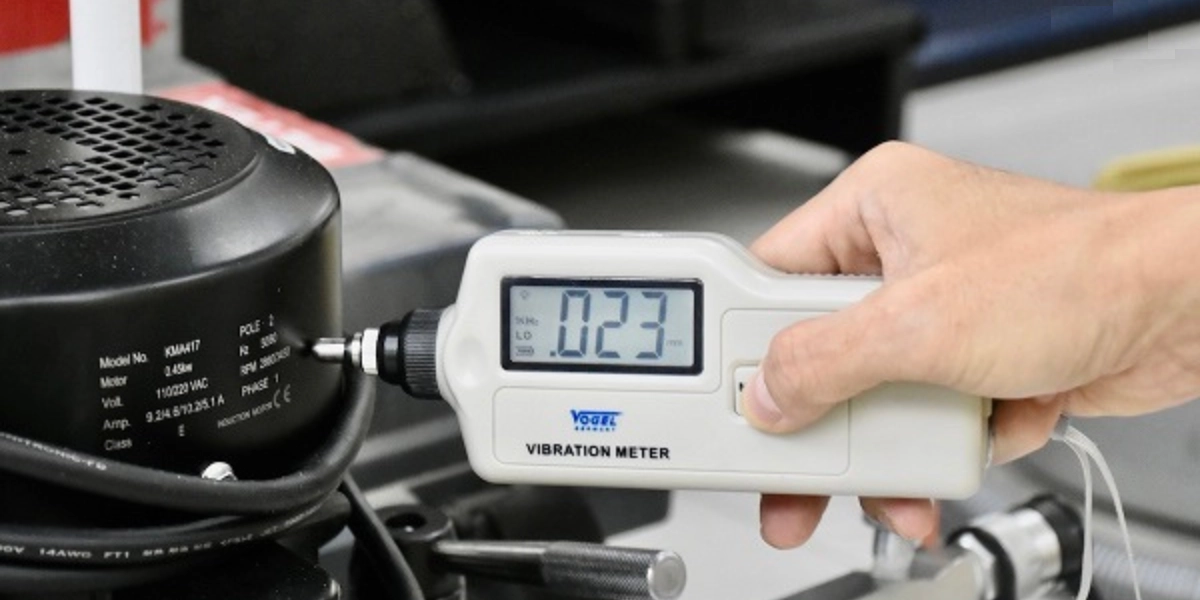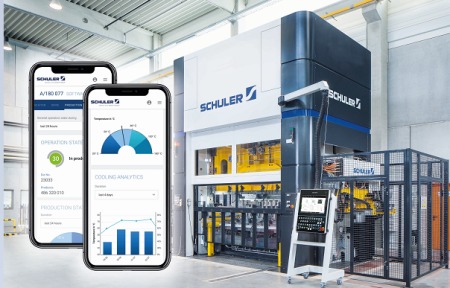
For example, press force and stroke rates can be called up remotely at any time, including historical data. They provide an indication of incorrectly positioned dies, for example, and of damage that is imminent. The cooling and lubrication circuits can also be recorded and displayed, including temperatures and system pressures. In addition to temperatures, important parameters for the drive system include electrical power consumption.
Simple Connectivity for Fast Success
Newer machines already have an Edge Gateway built in, while older lines can be retrofitted with it relatively easily. This allows machine and process data to be processed in the Edge before it is stored in a central location. With the operator’s consent, the data can also be transmitted via a secure connection to a computer center, where the computer processes it and visualizes it in graphics that are as clear as possible. Unscheduled downtimes in the press shop can thus be effectively avoided.
If you want to go one step further, you can install cameras into presses which monitor the forming process with the aid of intelligent software. They detect, for example, if a punching residue has strayed into the die and threatens to damage it, and stop the line immediately. This is made technically possible by comparing the actual and target status within fractions of a second. Press manufacturer Schuler calls this solution ‘Visual Die Protection’.
Service via Data Goggles
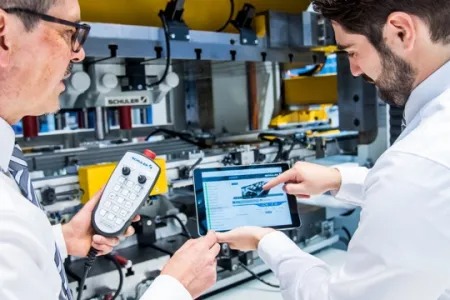
And if, despite all these safety precautions, the press does come to a standstill, press operators no longer have to wait for a service employee to travel to the site for hours. With the help of special software, the service technician can immediately gain an impression of the condition of the press: Just like a video chat, the customer only has to point his smartphone at the machine.
Thanks to augmented reality technology, the expert can then mark defective parts on the press or show the change of a setting directly in the field of vision of the cell phone. If the customer uses data glasses, he has both hands free to solve the problem himself. In the vast majority of cases, a stoppage can be resolved in this way.
Digital Twin Speeds Production Startup
In the ideal case, the forming process and part transport have already been simulated on the computer before the design of the die has even begun. This minimizes the risk of failure in advance. The usual processes within the press can also be represented virtually long before the start of production with the help of its digital twin. Initial tests and software adjustments are also possible, which noticeably speeds up commissioning.
A further advantage is that, on the digital twin, the operating personnel can familiarize themselves with the system in advance. This means that training on the control system is possible while the press is still being set up – and without the risk of operating errors. And as soon as the press is up and running, training on the virtual image also makes sense, because then production on the real system does not have to be interrupted.
Electronic Assistants for Die Setup
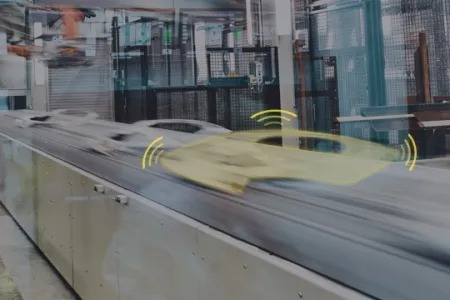
Electronic assistants can also speed up the start of production. For example, there is software that runs on mobile devices or the press control system and explains step-by-step how to set up the dies with pictures and videos. In return, the operators enter data from which the system calculates the optimum movement curves of slide and transfer that are necessary for the highest possible output.
‘Track & Trace’ thereby enables seamless proof of quality for ongoing production. The system marks each component with its own ID, which can be traced back to different points in time and product stages. All important information on this ID is stored in a database, so that it is possible to trace the coil from which the processed component originated, the parameters used in the forming process, and the quality characteristics of the component. Schuler has brought together all these solutions for networking and digitizing forming technology in its ‘Digital Suite.
Intelligent Press Shop Already a Reality
At the Smart Press Shop in Halle (Saxony-Anhalt, Germany), the intelligent press shop is becoming a reality. The joint venture between Porsche and Schuler operates a servo press line, a blanking press, and a blanking line with laser, producing body and structural parts. Among other things, the ‘Track & Trace’ and ‘Visual Die Protection’ solutions described above are used there.
In the Servoline 20 press line, which can form 40 doors or 80 fenders at an output of up to 20 strokes per minute, cameras monitor the so-called drawing edge of the parts. Under constant conditions in the forming process, the shape and size of this drawing edge remain largely the same. If there is a change here, this indicates a deviation in material properties, lubrication or drawing forces. In this case, the process monitoring gives an indication to the plant operator so that he can make corrections at an early stage to largely avoid expensive scrap or rework parts.
Continuous Monitoring of Oil Circuit
In addition to the dies, the oil circulating in the system is continuously monitored to determine the aging of the lubricant. The aim is to change the oil only when its condition really requires it. This usually increases the service life significantly. In addition, monitoring makes it possible to detect short-term changes in the oil’s properties, indicating contamination with water or foreign particles, for example.
The documentation for the entire plant is also available in digital form, which can save employees lengthy searches. The files can be accessed from any operator station with an HMI and screen, as well as from mobile devices which all Smart Press Shop employees are equipped with. For faster identification, electrical and fluid power components of the plant are marked with a DMC code.
For more information:
www.schulergroup.com
 Tiếng Việt
 Tiếng Anh
 Tiếng Hàn
 Tiếng Trung