New ‘Eyes’ Visual Inspection Features Reduce Cycle Times
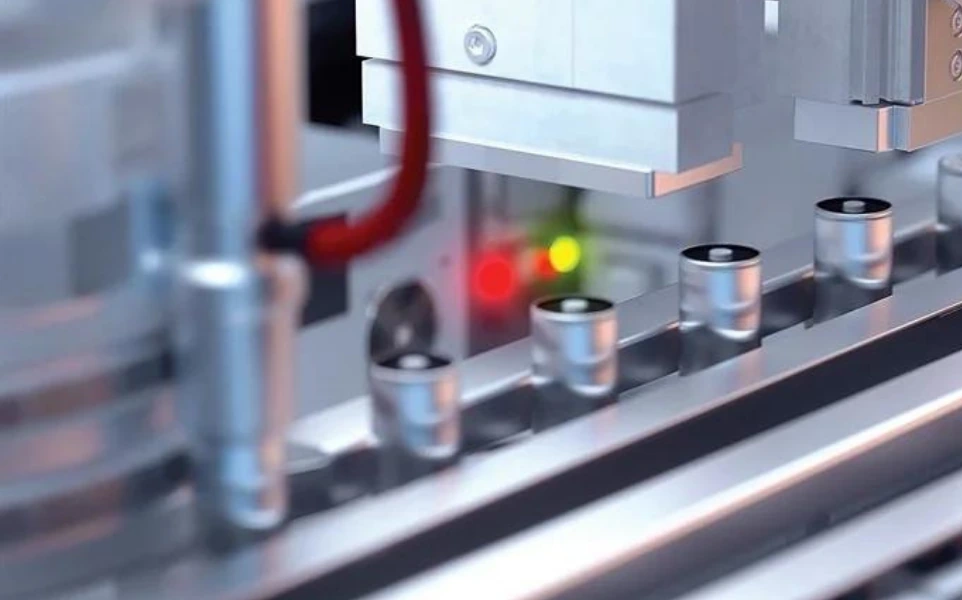
Traditional single-purpose industrial robots are losing ground to affordable, easy to use robots and peripherals that can be flexibly redeployed for a wide range of applications. This empowers manufacturers to gain even greater productivity increases from their automation investments. OnRobot is extending its commitment to ongoing customer empowerment with the recent launch of a software update for its popular, 2.5D camera-based Eyes vision system.“Traditional approaches to industrial automation place the product at the centre, which results in costly, over-complicated solutions to simple automation problems,” says Enrico Krog Iversen, CEO at OnRobot. “OnRobot takes a more practical, application-centred approach. This means providing our customers with easy-to-use tools tailored to specific application needs. But it also means empowering customers through updates to existing products that enable deployments in new application domains.”The new features, which enable Eyes to be deployed in quality inspection applications and on mobile setups, include one-shot detection for multiple objects, colour and blob detection and automatic landmark calibration tools designed to speed cycle time for mobile robot setups.“OnRobot prides itself on having meaningful conversations with customers and on having the agility to respond to those conversations quickly through new releases and product updates,” says Iversen. “Our customers told us that they love Eyes’ ease of use, but that they would like to see new features tailored to common quality inspection tasks. Eyes recent update delivers that functionality.” New Visual Inspection Features for Reduced Cycle Time and Fast ROIEyes’ new inspection features enable the system to easily sort, inspect, or pick & place unstructured objects using colour and contour detection – a capability that is beyond most competing vision systems. This detection method requires no workpiece teaching and finds items based on colour and size information input by the operator. Eyes’ inspection features can be used to inspect parts removed from CNC machines, for example, or to check IMM parts for excessive or inadequate material after part has been moulded. The tools also support manual inspections: operators can set up a camera and inspection program, manually place a workpiece in view and execute inspection. No robot required.The update also provides users with one-shot detection for multiple objects, allowing the system to pick all workpieces with only one picture. This reduces complexity for users and improves cycle times. The update includes tools that allow users to request specific workpiece types and specify gripper clearance parameters.Adding Eyes to Mobile RobotsA new Landmark feature has been added to Eyes’ powerful toolkit, enabling easy deployment of Eyes on mobile robots and setups with carts, trays, and pallets. The Landmark feature makes it simple to program mobile robots to move from station to station using end user-defined Landmarks as their guide. Landmarks can also be used to initiate specific robot operations: for example, when Eyes detects the arrival of a mobile cart in its workspace loaded with parts for picking, it can easily switch to pick & place routines. “More and more manufacturers are looking to deploy robot arms on mobile platforms for various factory and warehouse applications. The update gives our customers the ability to put ‘Eyes’ on mobile robots and does so without sacrificing the ease of use that makes our products such a compelling proposition for manufacturers of all sizes,” says Iversen.New visual inspection features for reduced cycle time and fast ROIEyes’ new inspection features enable the system to easily sort, inspect, or pick & place unstructured objects using colour and contour detection – a capability that is beyond most competing vision systems. This detection method requires no workpiece teaching and finds items based on colour and size information input by the operator. Eyes’ inspection features can be used to inspect parts removed from CNC machines, for example, or to check IMM parts for excessive or inadequate material after part has been moulded. The tools also support manual inspections: operators can set up a camera and inspection program, manually place a workpiece in view and execute inspection. No robot required.
For more information: www.onrobot.com

 Tiếng Việt
 Tiếng Anh
 Tiếng Hàn
 Tiếng Trung