- Giỏ hàng chưa có sản phẩm
 Dimac has therefore implemented Artificial Intelligence (AI) algorithms to process the images taken from surface digital cameras and to support the operator in the defect teach-in process. Defective parts are positioned below the surface cameras, the system then acquires the images and the operator highlights the defect in the image on the touchscreen using the available tools.
Defects such as cracks, stains, deformations, hints, dents and lack of material, which might not affect the part dimensions, are highlighted by the operator and taught-in in the system. After, the preliminary fast teach in process the system will be capable to recognise similar defects in the batch and the machine will be able to sort the parts. The AI algorithms require the availability of a gallery of NOK samples, in order to create a library of images of visual defects, which becomes the reference for the training of the system.
Benefits of Artificial Intelligence Not Limited to Inspection
The algorithms can interact with a company’s ERP system to exchange a large amount of data regarding the sorting cycle of every batch of fasteners – measured characteristics, attribute defects and tracking statistics about the defect distribution in the batch.
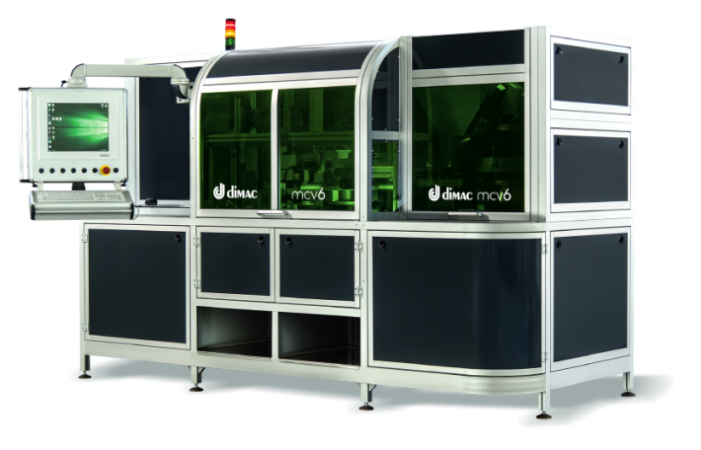
AI features are included in the last generation Dimac mcvx vision inspection software optimised for the brand new mcv6 high-speed inspection and sorting machine, based on a glass rotary table. The mcv6 represents another important step ahead for Dimac along the path to zero defects as it is an AI native machine, running with a fanless controller based on a processor of the 8th Intel generation 2660 Mhz DDR4 with GigE ports for high-resolution digital cameras and ultimate USB ports for external devices.
For more information: www.dimacsrl.com
Dimac has therefore implemented Artificial Intelligence (AI) algorithms to process the images taken from surface digital cameras and to support the operator in the defect teach-in process. Defective parts are positioned below the surface cameras, the system then acquires the images and the operator highlights the defect in the image on the touchscreen using the available tools.
Defects such as cracks, stains, deformations, hints, dents and lack of material, which might not affect the part dimensions, are highlighted by the operator and taught-in in the system. After, the preliminary fast teach in process the system will be capable to recognise similar defects in the batch and the machine will be able to sort the parts. The AI algorithms require the availability of a gallery of NOK samples, in order to create a library of images of visual defects, which becomes the reference for the training of the system.
Benefits of Artificial Intelligence Not Limited to Inspection
The algorithms can interact with a company’s ERP system to exchange a large amount of data regarding the sorting cycle of every batch of fasteners – measured characteristics, attribute defects and tracking statistics about the defect distribution in the batch.
AI features are included in the last generation Dimac mcvx vision inspection software optimised for the brand new mcv6 high-speed inspection and sorting machine, based on a glass rotary table. The mcv6 represents another important step ahead for Dimac along the path to zero defects as it is an AI native machine, running with a fanless controller based on a processor of the 8th Intel generation 2660 Mhz DDR4 with GigE ports for high-resolution digital cameras and ultimate USB ports for external devices.
For more information: www.dimacsrl.com
Bài viết liên quan
Tin mới nhất
 Tiếng Việt
 Tiếng Anh
 Tiếng Hàn
 Tiếng Trung