 Tiếng Việt
 Tiếng Anh
 Tiếng Hàn
 Tiếng Trung
Radiant Vision Systems, a provider of image-based light and color measurement solutions, has announced three new high-resolution models in its line of ProMetric Imaging Colorimeters and Photometers. New ProMetric systems extend the resolution range of Radiant’s imaging solutions up to 61 megapixels (61MP), adding the ProMetric Y45 and Y61 Imaging Photometers for high-resolution photopic and radiometric imaging, and the ProMetric I61 Imaging Colorimeter for high-resolution colorimetric imaging.
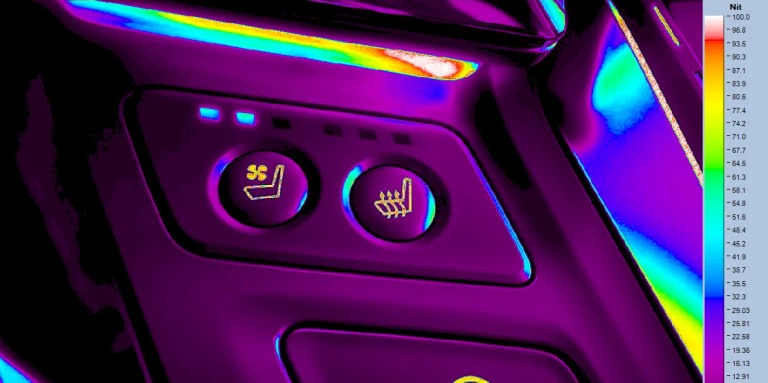
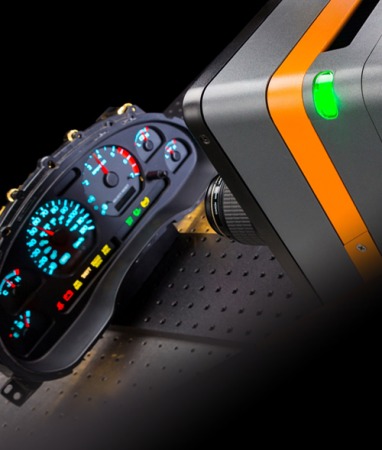 ProMetric imaging metrology solutions are used to measure properties of light that influence the visual quality of devices such as LEDs, displays, augmented and virtual reality (AR, VR) projections, and head-up displays (HUD). The benefits of imaging enable ProMetric systems to capture millions of data points simultaneously across a single field of view for extremely rapid measurement cycles. Imaging also enables spatial comparison of data points across the field of view, necessary for evaluating brightness or color uniformity, gradient, contrast, pixel-level variation, random defects, and dimensional accuracy of light source distributions and displays.
“Image-based metrology continues to demand higher imaging resolution to capture more precise, critical details in devices of any shape or size,” states Doug Kreysar, CEO of Radiant Vision Systems. “For the most effective metrology, the goal is to capture the entire device under test within a single image while continuing to measure all of its constituent features. Increasing resolution helps us evaluate larger regions, such as LED screens, while continuing to measure the brightness and color of each individual diode. It also allows us to measure millions more tiny light-emitting elements, such as OLED and microLED subpixels, simultaneously across a smartphone or microdisplay to ensure pixel-to-pixel uniformity. A high-resolution imaging system can capture larger and more multifeatured automotive displays or backlit instrument panels while still enabling us to perform unique evaluations for each illuminated symbol or shape at once. Similarly, as HUDs project across wider areas of the windshield, high resolution allows us to capture all virtual images clearly at any size or perceived distance.”
New ProMetric Imaging Colorimeters and Photometers build upon the proven imaging performance that has made ProMetric systems a leading choice for manufacturing engineers, display makers, and optical designers for over 25 years. Ushering in the next level of imaging resolution for the ProMetric line, new ProMetric Y61 and I61 imaging solutions feature a 61-megapixel (9568 x 6380) CMOS sensor. The new ProMetric Y45 Imaging Photometer features a 45-megapixel (8192 x 5460) CMOS sensor. While capturing millions more data points per measurement image for analysis, new ProMetric systems achieve even faster measurement speeds than current systems. These improvements unlock new applications for manufacturers whose processes rely on consistent measurement accuracy for increasingly small light sources and display pixels (such as microLEDs), higher pixel densities (more pixels per inch, or PPI), higher angular resolutions (more pixels per degree, or PPD, as in AR/VR headsets), wider fields of view, extended virtual image distances (as in augmented reality head-up displays, or AR HUD), and increasingly subtle cosmetic surface defects.
 “We are cautious in our system design—for metrology, it’s not all about resolution,” adds Kreysar. “We want to capture smaller details, but we don’t want to sacrifice the accuracy of values measured within each detail. We want more data, but we don’t want a measurement to take so long that it is ineffective for production inspection. In imaging, there are trade-offs between resolution, accuracy, and speed. It is a delicate balance to optimize one without impacting another. At Radiant, we spend significant development and engineering hours testing each component of our ProMetric systems to ensure sensors function appropriately with system electronics, lenses are optimized for sensor size and imaging field of view, that we are not capturing stray light, that our dynamic range and signal-to-noise ratio (SNR) remain extremely high, and that our measurement speeds match our customers’ applications.”
The sensor, optics, filter, electronics, and calibrations of each ProMetric Imaging Colorimeter and Photometer are carefully selected and tested together to ensure each system provides consistent imaging performance at higher resolutions. Tristimulus color filters allow ProMetric systems to achieve a close match to CIE color-matching functions out of the box, aligning evaluation criteria with universal measurement standards and human visual perception for quality that matches consumer expectations. ProMetric solutions capitalize on the full resolution of each system’s calibrated image sensor, quantifying light values such as luminance, chromaticity, and intensity across millions of data points in seconds. ProMetric models can be paired with a variety of lenses calibrated over a wide range of working distances and viewing angles. Standard lenses offer electronic focus and aperture control via software to reduce setup time, simplify adjustment, and improve repeatability. ProMetric imaging solutions support high-speed USB and Ethernet (to 10 GigE) communications and can be integrated into fully automated systems and production lines utilizing TrueTest™ Software with available API and SDK.
For more information: www.radiantvisionsystems.com