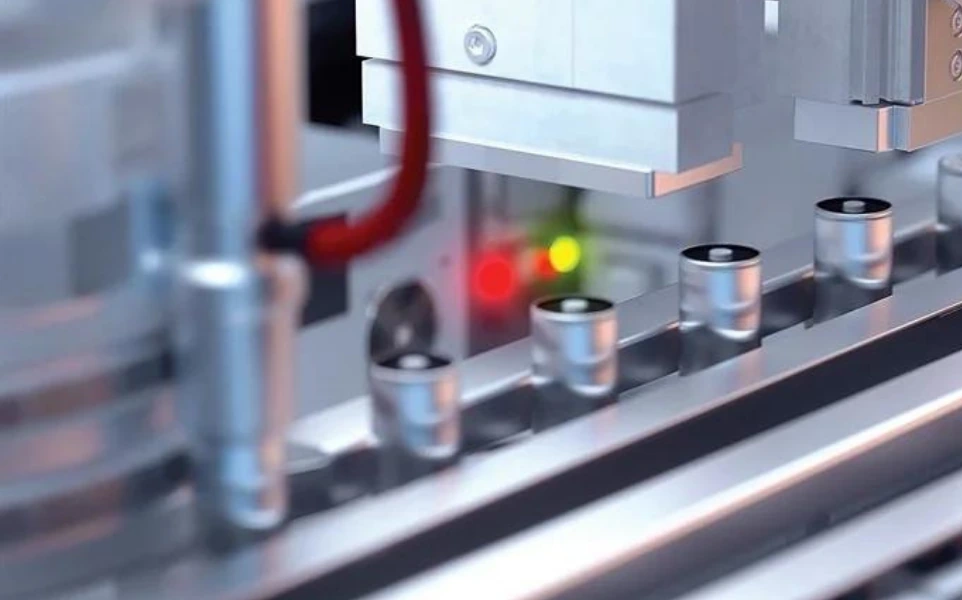
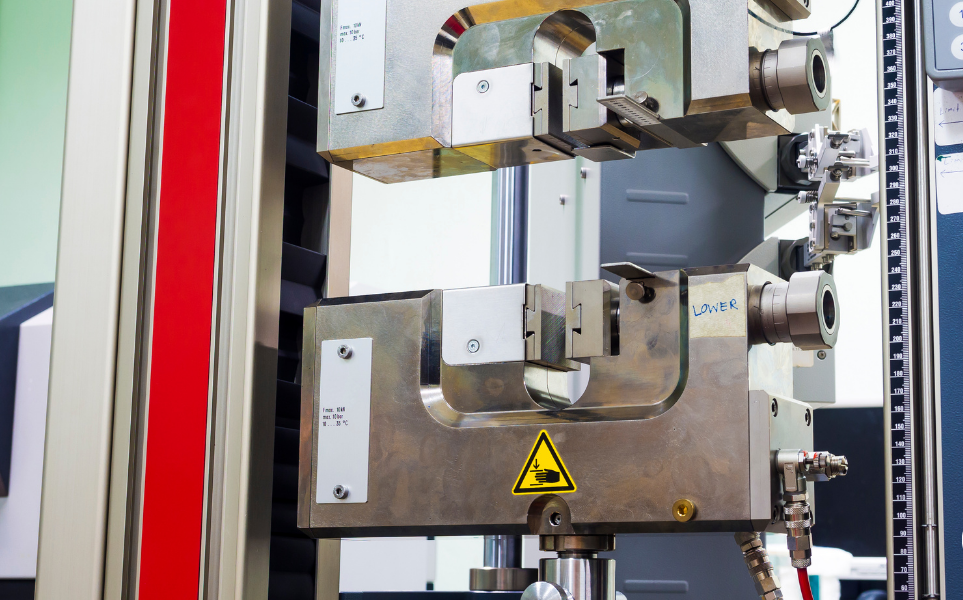
Traditional machine vision systems perform reliably with consistent, well-manufactured parts. They operate via step-by-step filtering and rule-based algorithms that are more cost-effective than human inspection. But algorithms become unwieldy as exceptions and defect libraries grow. Certain traditional machine vision inspections, such as final assembly verification, are notoriously difficult to program due to multiple variables that can be hard for a machine to isolate such as lighting, changes in color, curvature, and field of view.
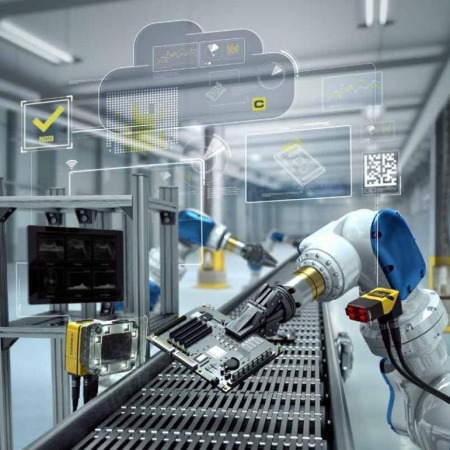
Although machine vision systems tolerate some variability in a part’s appearance due to scale, rotation, and pose distortion, complex surface
textures and image quality issues introduce serious inspection challenges. Machine vision systems struggle to appreciate variability and deviation between very visually similar parts. Inherent differences or anomalies may or may not be cause for rejection, depending on how the
user understands and classifies them. ‘Functional’ anomalies, which affect a part’s utility, are almost always cause for rejection, while cosmetic anomalies may not be, depending upon the manufacturer’s needs and preference. Most problematically, these defects are difficult for a traditional machine vision system to distinguish between.
Advantages of Human Inspection
Unlike traditional machine vision, humans are adept at distinguishing between subtle cosmetic and functional flaws, as well appreciating variations in part appearance that may affect perceived quality. Though limited in the rate at which we can process information, humans are uniquely able to conceptualize and generalize. We excel at learning by example and are capable of distinguishing what really matters when it
comes to slight anomalies between parts. This makes human vision the best choice, in many cases, for the qualitative interpretation of a complex, unstructured scene—especially those with subtle defects and unpredictable flaws. For example, humans are much more accurate when dealing with deformed and otherwise hard-to-read characters, complex surfaces, and cosmetic defects. For many of these applications, machines cannot compete with humans for their appreciation of complexity.
Deep Learning for Complex Inspection
Deep learning models can help machines overcome their inherent limitations by marrying the self-learning of a human inspector with the speed and consistency of a computerized system. Deep learning-based image analysis is especially well-suited for cosmetic surface inspections that are complex in nature: patterns that vary in subtle but tolerable ways, and where position variants can preclude the use of methods based on spatial frequency. Deep learning excels at addressing complex surface and cosmetic defects, like scratches and dents on parts that are turned, brushed, or shiny. Whether used to locate, read, inspect, or classify features of interest, deep learning-based image analysis differs from traditional machine vision in its ability to conceptualize and generalize a part’s appearance based
upon its distinguishing characteristics—even when those characteristics subtly vary or sometimes deviate.
Choosing between Traditional Machine Vision and Deep Learning
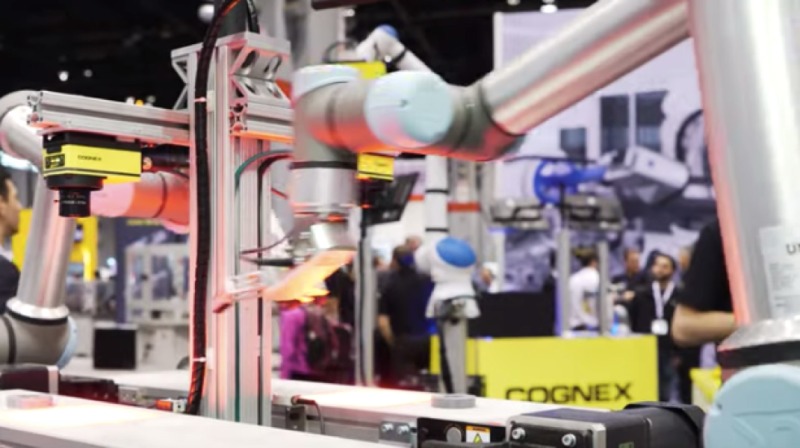
The choice between traditional machine vision and deep learning depends upon the type of application being solved, the amount of data being processed, and processing capabilities. Indeed, for its many benefits, deep learning is not the right solution for many applications. Traditional rule-based programming technologies are better at gauging and measuring, as well as performing precision alignment. In some cases, traditional vision may be the best choice to fixture a region of interest precisely, and deep learning to inspect that region. The result of a deep learning-based inspection may then be passed back to traditional vision to take accurate measurements of the defect size and shape.
Deep learning complements rule-based approaches, and it reduces the need for deep vision domain expertise to construct an effective inspection. Instead, deep learning has turned applications that previously required vision expertise into engineering challenges solvable by non-vision experts. Deep learning transfers the logical burden from an application developer, who develops and scripts a rule-based algorithm, to an engineer training the system. It also opens a new range of possibilities to solve applications that have never been attempted without a human inspector. In this way, deep learning makes machine vision easier to work with, while expanding the limits of what a computer and camera can accurately inspect.
The above is an extract ‘Deep Learning for Factory Automation Guide’ from Cognex that can be downloaded
at this link.
For more information:
www.cognex.com

 Tiếng Việt
 Tiếng Anh
 Tiếng Hàn
 Tiếng Trung