The ever-increasing development pace and diversity of electronic appliances means increasing production challenges in printed circuit board assembly (PCBA), a complex process that involves numerous component suppliers, sophisticated assembly machines and manual labour. In addition, the miniaturisation and growing complexity of printed circuit boards (PCBs) and the derived assembly work add to the complexity of this phase. This makes quality assurance (QA) of the PCBA an invaluable, yet challenging step of the manufacturing process.
In this article, Ofer Nir, VP of Products & Marketing at autonomous visual inspection specialist Inspekto, explores the challenges faced in PCB inspections.
To quote Leonardo da Vinci, “Details make perfection, and perfection is not a detail.” This is certainly true for the manufacturing and quality inspection of PCBs, the basic assembly unit of any electronic device, where a slight deviation in assembly can produce a significant performance problem in the final product.
Growing demand for consumer electronics and smart connected devices in industry 4.0 is leading to considerable growth in the global PCB market, which is expected to reach USD 86.17 billion by 2026. The market has also become more demanding, requiring boards with higher accuracy and precision during the manufacturing process.
The quality and reliability of PCBA directly impacts the efficiency and cost of production, as well as the functionality and reliability of end devices. In the highly competitive consumer electronics sector, production margins are key for survival; any variation in production efficiency and cost has significant implications for the manufacturers. Reliability and performance are especially important in safety-critical sectors such as aerospace, automotive, defence and med-tech. For example, PCBs are a key component in producing cochlear implants, pacemakers and medical imaging equipment — where precision could be a matter of life or death.
Over the past decades, PCB manufacturers have also striven to produce smaller, increasingly complex boards. The higher-density placement of smaller components makes the design, manufacturing and assembly processes even more challenging. For these reasons, quality assurance (QA) is essential to ensuring that the transition from PCB design to manufacturing is mistake-free.
Need For Inspection Reliability and Agility
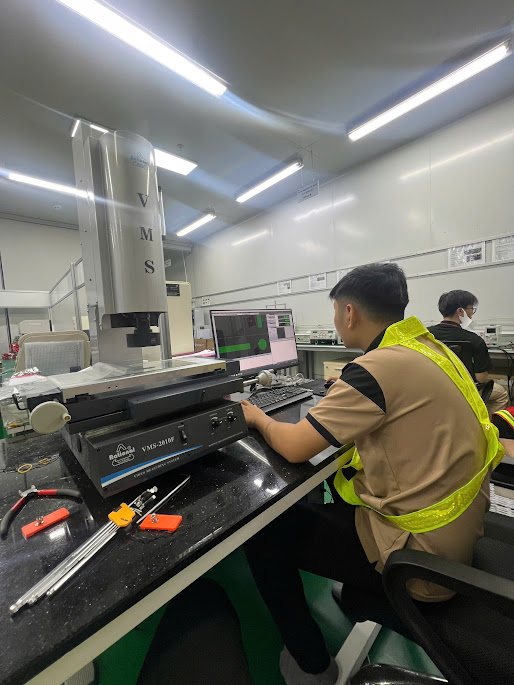
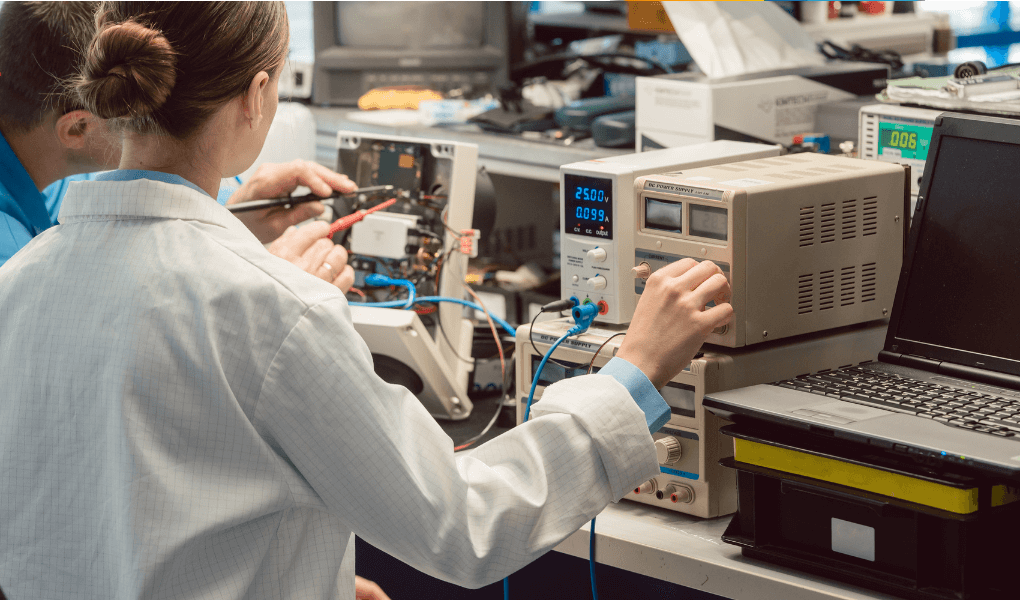
Because of the high complexity of modern PCBs, which incorporate a huge number of hardly-visible elements, manual inspection is not a reliable nor scalable QA method. Defects on tiny sub-components are difficult to see and can become almost impossible to spot after an eight-hour shift. Moreover, even if inspectors manage to keep their focus unaltered throughout an entire shift, the amount of time needed to examine a PCB makes this method unviable.
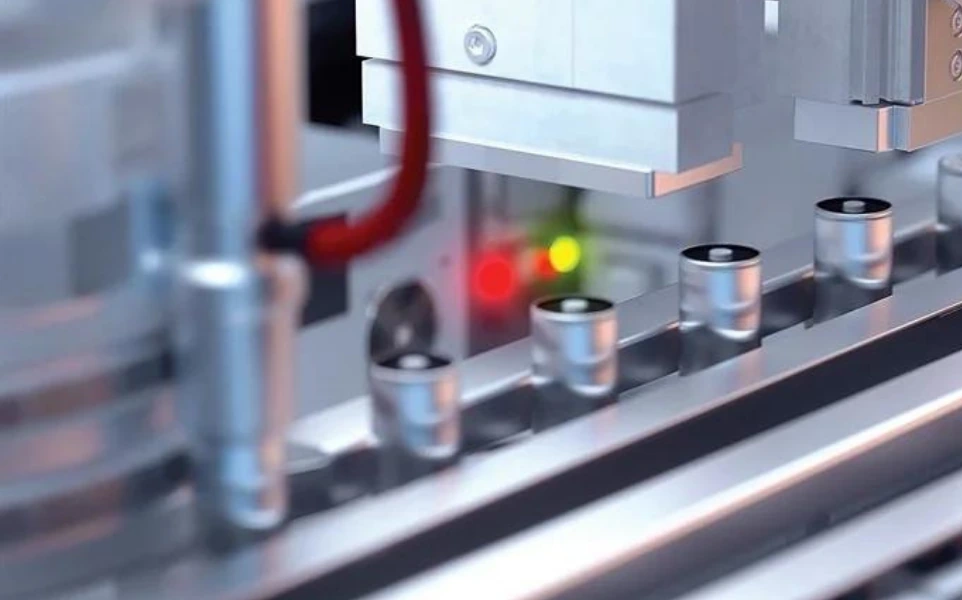
For these reasons, automated visual quality inspection has long been sought-after to inspect PCBs. Machine vision (MV) solutions have mitigated the core challenges of human inspectors — they are accurate, do not tire, and analyse huge amounts of small details. MV seems ideal for detecting common defects such as soldering errors, a warped board, surface finishing mistakes and more.
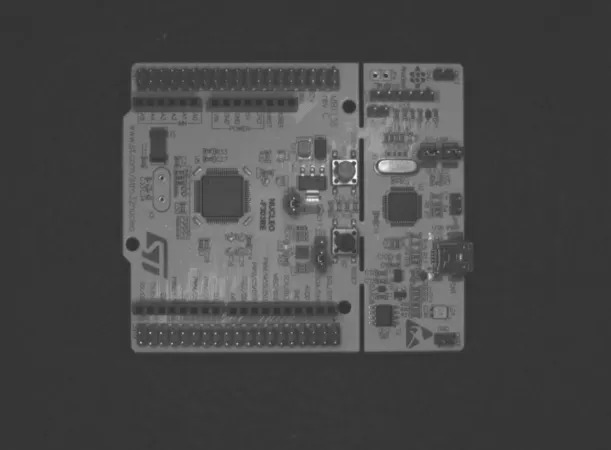
PCB as seen by the INSPEKTO S70
However, traditional MV solutions struggle to keep up with a PCB manufacturer’s need for flexible yet accurate QA. These conventional solutions generally involve the commissioning, design and integration of a customised project that relies on the constant services of a systems integrator or MV expert. The whole process can be expensive and time-consuming, and the final solution will be fit to inspect only a specific type of PCB. At best, these solutions can be a good fit for highly engineered, rigid assembly lines with large production batches.
Moreover, another common attribute of PCBA lines is the constant change of the assembled module. In the current global supply-chain reality, component suppliers constantly change, also inevitably changing the appearance of the PCBA.
Given the dynamicity of the PCBA market — and its need for customisation, small-batch manufacturing and how frequently PCBs change — it’s easy to see why the fixity of traditional MV discourages many manufacturers from transitioning to automated QA.
However, to compete on a global scale, PCB manufacturers need to aim for nothing less than perfection. Autonomous QA can give manufacturers the competitive edge they need and ensure that PCBs leave their facilities mistake-free — after all, as Leonardo da Vinci said, “Details make perfection.”
For more information: www.inspekto.com.

 Because of the high complexity of modern PCBs, which incorporate a huge number of hardly-visible elements, manual inspection is not a reliable nor scalable QA method. Defects on tiny sub-components are difficult to see and can become almost impossible to spot after an eight-hour shift. Moreover, even if inspectors manage to keep their focus unaltered throughout an entire shift, the amount of time needed to examine a PCB makes this method unviable.
For these reasons, automated visual quality inspection has long been sought-after to inspect PCBs. Machine vision (MV) solutions have mitigated the core challenges of human inspectors — they are accurate, do not tire, and analyse huge amounts of small details. MV seems ideal for detecting common defects such as soldering errors, a warped board, surface finishing mistakes and more.
Because of the high complexity of modern PCBs, which incorporate a huge number of hardly-visible elements, manual inspection is not a reliable nor scalable QA method. Defects on tiny sub-components are difficult to see and can become almost impossible to spot after an eight-hour shift. Moreover, even if inspectors manage to keep their focus unaltered throughout an entire shift, the amount of time needed to examine a PCB makes this method unviable.
For these reasons, automated visual quality inspection has long been sought-after to inspect PCBs. Machine vision (MV) solutions have mitigated the core challenges of human inspectors — they are accurate, do not tire, and analyse huge amounts of small details. MV seems ideal for detecting common defects such as soldering errors, a warped board, surface finishing mistakes and more.
 Tiếng Việt
 Tiếng Anh
 Tiếng Hàn
 Tiếng Trung