 Tiếng Việt
 Tiếng Anh
 Tiếng Hàn
 Tiếng Trung
Flexibility and Easy Commissioning
 Different tools of the 2-D vision sensors can be combined or parameterized into one job. The VOS series offers users the possibility of setting a variety of jobs in the camera – these can be easily exchanged, duplicated or ported from one camera to another. One sensor can be used for different applications throughout the plant.
By pre-processing measurement directly on the sensor or in the camera, VOS delivers maximum ease of use even for complex applications. The cameras have an integrated evaluation vision tool (embedded PC), meaning that unlike for classic PC-based vision systems, no further image authorization on external PC systems is required for data processing. The graphical user interface provides easy commissioning and parameterization of the sensors.
In addition to the parameterization monitor, an application monitor can also be displayed remotely. This allows continuous monitoring of the processes and also displays the measurement result in addition to the image. Process and error images can be temporarily stored in the camera or automatically transferred, which allows for remote diagnostics and optimization.
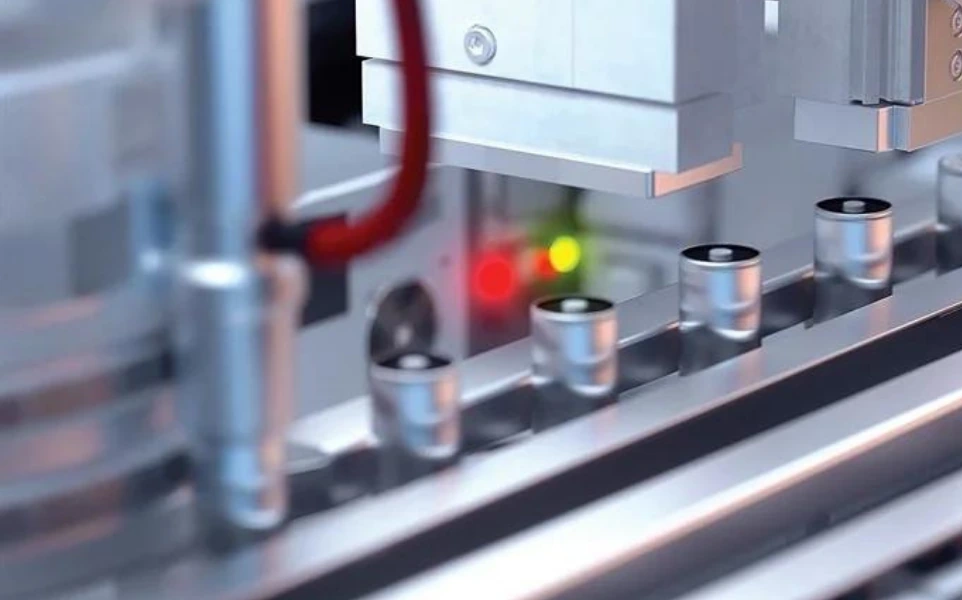
For example, during the automatic bottle labeling, filling and capping process, it is possible that labels have not been applied correctly or a cap has not been fitted properly. This is where the VOS vision sensors are used to inspect labels and bottle caps. Using vision tools, the sensor checks the position of the label in the image as well as the complete mounting of the caps in just one step. VOS offers a global shutter image sensor with integrated optics, illumination and electronic evaluation―combining all components required for operating a vision system in a single housing. This makes the camera-based sensors suitable for positioning and guiding, detection and alignment, optical measurement, as well as identification and text recognition (OCR) tasks.
The vision sensors can be assembled based on the application requirements, such as the field of view or the measurement task, and can be individually parameterized for the application using the license-free software included in the scope of delivery. All sensors have standardized connections for possible expansion with external components – such as separate illumination, C-mount lenses with different focal lengths, or even waterproof lens housings with IP67 protection. Pepperl+Fuchs provides three different housing designs with the VOS series to meet the challenges of different applications.
In addition to integrated illumination, the vision sensors have a mechanically adjustable focus, which provides measuring distances from 0 to 1000 mm. The compact cameras master all standard incident light applications and are ideal for measuring tasks with more complex illumination scenarios due to their external illumination―as well as for applications with longer measuring distances that require stronger illumination. The measuring field size of the C-mount models can be adjusted to the selected measuring distance by means of exchangeable lenses.
For more information: www.pepperl-fuchs.com
Different tools of the 2-D vision sensors can be combined or parameterized into one job. The VOS series offers users the possibility of setting a variety of jobs in the camera – these can be easily exchanged, duplicated or ported from one camera to another. One sensor can be used for different applications throughout the plant.
By pre-processing measurement directly on the sensor or in the camera, VOS delivers maximum ease of use even for complex applications. The cameras have an integrated evaluation vision tool (embedded PC), meaning that unlike for classic PC-based vision systems, no further image authorization on external PC systems is required for data processing. The graphical user interface provides easy commissioning and parameterization of the sensors.
In addition to the parameterization monitor, an application monitor can also be displayed remotely. This allows continuous monitoring of the processes and also displays the measurement result in addition to the image. Process and error images can be temporarily stored in the camera or automatically transferred, which allows for remote diagnostics and optimization.
For example, during the automatic bottle labeling, filling and capping process, it is possible that labels have not been applied correctly or a cap has not been fitted properly. This is where the VOS vision sensors are used to inspect labels and bottle caps. Using vision tools, the sensor checks the position of the label in the image as well as the complete mounting of the caps in just one step. VOS offers a global shutter image sensor with integrated optics, illumination and electronic evaluation―combining all components required for operating a vision system in a single housing. This makes the camera-based sensors suitable for positioning and guiding, detection and alignment, optical measurement, as well as identification and text recognition (OCR) tasks.
The vision sensors can be assembled based on the application requirements, such as the field of view or the measurement task, and can be individually parameterized for the application using the license-free software included in the scope of delivery. All sensors have standardized connections for possible expansion with external components – such as separate illumination, C-mount lenses with different focal lengths, or even waterproof lens housings with IP67 protection. Pepperl+Fuchs provides three different housing designs with the VOS series to meet the challenges of different applications.
In addition to integrated illumination, the vision sensors have a mechanically adjustable focus, which provides measuring distances from 0 to 1000 mm. The compact cameras master all standard incident light applications and are ideal for measuring tasks with more complex illumination scenarios due to their external illumination―as well as for applications with longer measuring distances that require stronger illumination. The measuring field size of the C-mount models can be adjusted to the selected measuring distance by means of exchangeable lenses.
For more information: www.pepperl-fuchs.com
Different tools of the 2-D vision sensors can be combined or parameterized into one job. The VOS series offers users the possibility of setting a variety of jobs in the camera – these can be easily exchanged, duplicated or ported from one camera to another. One sensor can be used for different applications throughout the plant.
By pre-processing measurement directly on the sensor or in the camera, VOS delivers maximum ease of use even for complex applications. The cameras have an integrated evaluation vision tool (embedded PC), meaning that unlike for classic PC-based vision systems, no further image authorization on external PC systems is required for data processing. The graphical user interface provides easy commissioning and parameterization of the sensors.
In addition to the parameterization monitor, an application monitor can also be displayed remotely. This allows continuous monitoring of the processes and also displays the measurement result in addition to the image. Process and error images can be temporarily stored in the camera or automatically transferred, which allows for remote diagnostics and optimization.
For example, during the automatic bottle labeling, filling and capping process, it is possible that labels have not been applied correctly or a cap has not been fitted properly. This is where the VOS vision sensors are used to inspect labels and bottle caps. Using vision tools, the sensor checks the position of the label in the image as well as the complete mounting of the caps in just one step. VOS offers a global shutter image sensor with integrated optics, illumination and electronic evaluation―combining all components required for operating a vision system in a single housing. This makes the camera-based sensors suitable for positioning and guiding, detection and alignment, optical measurement, as well as identification and text recognition (OCR) tasks.
The vision sensors can be assembled based on the application requirements, such as the field of view or the measurement task, and can be individually parameterized for the application using the license-free software included in the scope of delivery. All sensors have standardized connections for possible expansion with external components – such as separate illumination, C-mount lenses with different focal lengths, or even waterproof lens housings with IP67 protection. Pepperl+Fuchs provides three different housing designs with the VOS series to meet the challenges of different applications.
In addition to integrated illumination, the vision sensors have a mechanically adjustable focus, which provides measuring distances from 0 to 1000 mm. The compact cameras master all standard incident light applications and are ideal for measuring tasks with more complex illumination scenarios due to their external illumination―as well as for applications with longer measuring distances that require stronger illumination. The measuring field size of the C-mount models can be adjusted to the selected measuring distance by means of exchangeable lenses.
For more information: www.pepperl-fuchs.com