 Tiếng Việt
 Tiếng Anh
 Tiếng Hàn
 Tiếng Trung
The Rapid Growth of Lithium Power Battery Industry
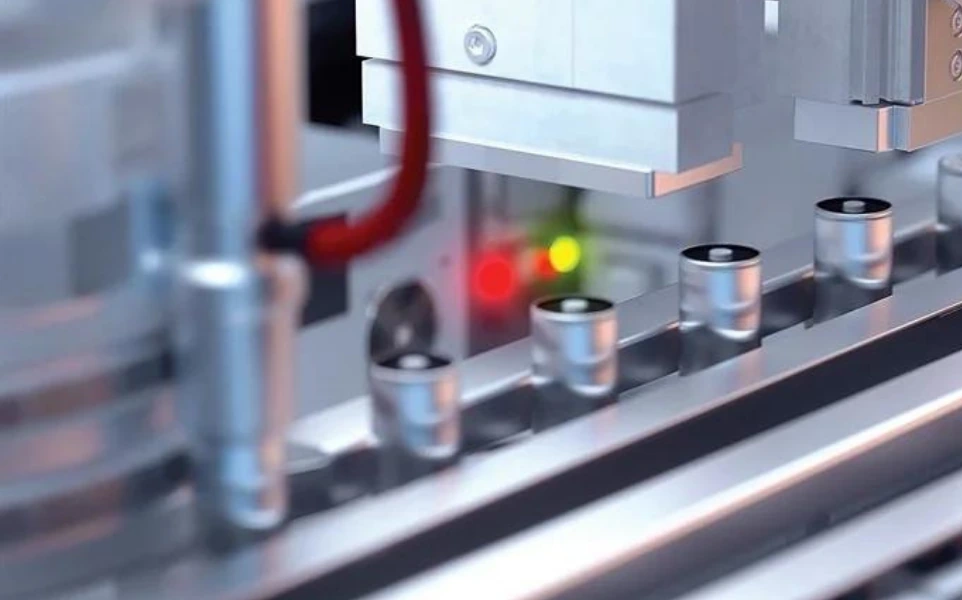
Due to the high demand growth of the lithium battery, battery manufacturers need to maximize production efficiency while ensuring the quality of the battery. In order to improve production efficiency, it is necessary to adapt real-time visual inspection during the entire manufacturing cycle.
Moreover, since lithium batteries are safety-related parts, there are strict requirements that must be adhered to which makes machine vision an inevitable part of production. According to Specification & rules of Lithium-ion Battery Industry published by Ministry of Information and Technology of China (MIIT) in 2018, the measurement accuracy of electrode coating thickness and length shall not be less than 2μm and 1mm respectively, and the inspection accuracy of the burr after cutting shall not be less than 1 μm.
Applying Industrial Cameras to Lithium Battery Production
Generally, the production of lithium batteries involves several steps such as material preparation, electrode manufacturing and notching, cell manufacturing, battery module assembly, and battery packing. Generally, the production of lithium batteries involves several steps such as material preparation, electrode manufacturing and notching, cell manufacturing, battery module assembly, and battery packing.To minimize the cost of the system, a solution consisting of multiple cameras can be applied for high precision dimensional measurement. This solution consists of several lower resolution cameras to capture dimensions of multiple sections of the object. In comparison with the single camera solution, the multi-camera solution can reduce the total cost by up to 50% and will not be limited by the size of object.
However, the multi-camera solution has high requirement on camera stability. This means the camera should have low signal jitter to ensure correct data synchronization so the high precision measurement can be achieved.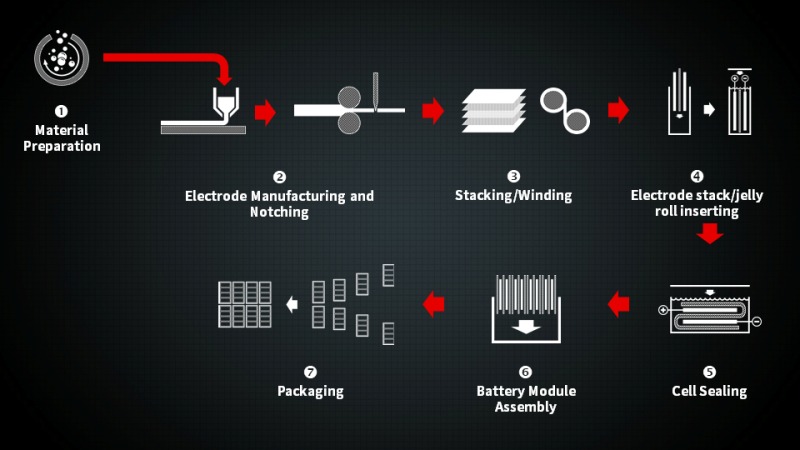
Multi-Camera Solution reduces overall System Cost
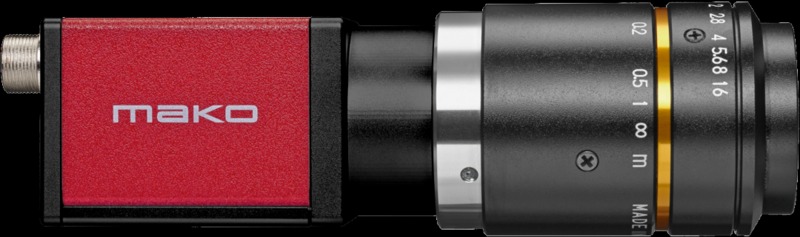 In this solution, the client decided to use Allied Vision Mako cameras. Mako is very stable and the triggering signal jitter is lower than 8μs, which can be as low as 5μs in actual running. The PTP feature of Mako cameras can ensure proper multi-camera synchronization. The cost of four Mako G-319B cameras is half of what the high-resolution camera would cost. By adapting this solution, the client tremendously reduced their system cost.
Mako combines industrial performance and a rich feature set with a small form factor at an affordable price. Its GigE Vision compliant interface enables a reliable connection to your host over long distances up to 100 meters. Power over Ethernet and Trigger over Ethernet allow simplified and cost-optimized system setups with a single cable solution. With advanced triggering features such as Precision Time Protocol (PTP), Mako cameras can be perfectly synchronized with other devices in a multi-camera system.
For more information: www.alliedvision.com
In this solution, the client decided to use Allied Vision Mako cameras. Mako is very stable and the triggering signal jitter is lower than 8μs, which can be as low as 5μs in actual running. The PTP feature of Mako cameras can ensure proper multi-camera synchronization. The cost of four Mako G-319B cameras is half of what the high-resolution camera would cost. By adapting this solution, the client tremendously reduced their system cost.
Mako combines industrial performance and a rich feature set with a small form factor at an affordable price. Its GigE Vision compliant interface enables a reliable connection to your host over long distances up to 100 meters. Power over Ethernet and Trigger over Ethernet allow simplified and cost-optimized system setups with a single cable solution. With advanced triggering features such as Precision Time Protocol (PTP), Mako cameras can be perfectly synchronized with other devices in a multi-camera system.
For more information: www.alliedvision.com