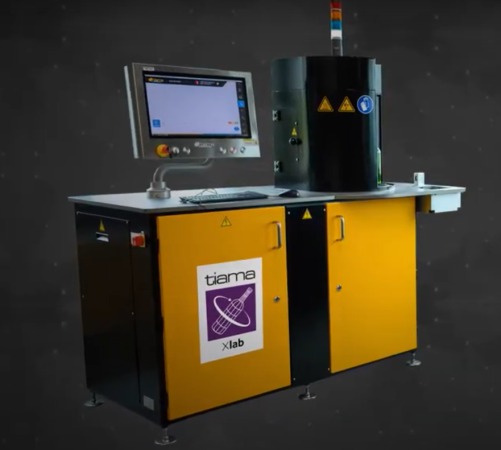
The recently introduced Tiama XLAB provides glass makers with an inspection tool which delivers complete geometrical knowledge about the glass container being produced. The XLAB solution automatically generating a wealth of data with which tolerances can be defined more exactly and faults identified quickly resulting in more efficient process diagnostics. Truly production-oriented and user-friendly, XLAB can be operated by any operators, and since it is not an in-line system, has the flexibility to be easily integrated into any existing glass production process, at the hot end, cold end or in a laboratory.
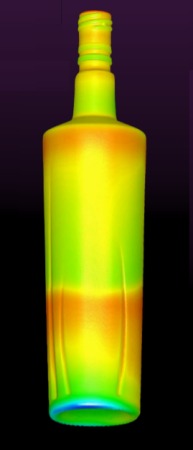
XLAB generates a full 3D image composed of millions of facets that can be freely rotated allowing complete insight into glass containers since the 3D model can be ‘dissected’ from all sides and at all points. Volume, capacity, vacuity, diameters and angles can all be measured as well as glass thickness fully mapped. Engraving and embossing can also be analysed with no limitation on the inspection of glass container types, color and shape.
XLAB can be considered a full laboratory taskforce in one machine automating complicated glass quality control operations allowing it to replace many existing systems. XLAB is a a smart solution that provides far more data than ever aiding glass makers to optimize their quality control from the initial containers produced to ongoing routine production checks and individual control, or to validate new container models from production commencement
While current technology automates basic inspection, XLAB is a new generation system that supports the quality and production personnel with their most complicated operations and, while their expertise in diagnostics and countermeasures remains important, it greatly
reduces human error.
On the surface it may seem that current glass container monitoring and inspection systems cover the entire spectrum but Xlab goes way beyond these traditional capabilities because Xlab is production and quality-oriented, flexible and user-friendly. Xlab provides non-contact and non-destructive 3D measurement with no constraints in terms of container shape or colour and is Smart Factory connected with automatic reporting and production recording. Featuring external and internal modelling and measurement and also virtual measured volume, capacity and vacuity. Generated data facilitates fast identification of defective areas leading to rapid diagnostics and process feedback.
Data captured by Xlab can be fed back to the production process, which, in turn, will help the system run more effectively. Xlab features automatic reporting, advanced data analysis for statistical process control (SPC) that can be cross checked with supplement data from existing hot and cold end systems. Production can be recorded, which means that current samples are saved and the 3D images of containers can be imported and exported. Xlab delivers detailed data for new container validation – also recorded for future reference. The result: increased productivity, higher quality and, what may even be more important, a positive effect on the environment due to more efficient production and the saving of resources.
For more information:
www.tiama.com

 Tiếng Việt
 Tiếng Anh
 Tiếng Hàn
 Tiếng Trung